


 Chinese


Products Description
Two questions decide whether Bis-(3-triethoxysilylpropyl)amine belongs on your bill of materials: whether the surface you bond to is one this grade actually wets, and whether your process can live with a molecule carrying its own amine. This page answers in the order a buyer really works — substrate fit first, then the identity figures you can verify on a certificate, then dosing, packing and the checks that run on arrival. CAS 13497-18-2 and a relative molecular mass of 425.71 fix which substance is on the drum.
Table of contents
- 1. Name the two phases
- 2. Identity figures and equivalents
- 3. Constants, and what a drift is telling you
- 4. Dosage counted against a named mass
- 5. Packing, trade terms and papers
- 6. Storage, rotation and incoming checks
- Specific gravity at 25 °C against 0.970.
- Refractive index at 25 °C against 1.429.
- Colour against a retained reference — hold a darker drum for sampling rather than filtering it in.
- Bis-(3-trimethoxysilylpropyl)amine
- EP-15 Ethyltriacetoxysilane CAS 17689-77-9
- EP-16 Propyltriacetoxysilane CAS 17865-07-5
- EP-10 Methyltriacetoxysilane CAS 4253-34-3
- EP-26 1,2-Bis(trimethoxysilyl)ethane CAS 18406-41-2
- EP-27 1,2-Bis(triethoxysilyl)ethane CAS 16068-37-4
- EP-28 Dimethyldimethoxysilane CAS 1112-39-6
1. Name the two phases
Adhesion is settled at an interface, so decide which two phases you are joining before you order. One side is inorganic: glass fibre, metal, mineral filler. The other is organic: a thermoset, a thermoplastic, a synthetic rubber. The grade works at that boundary.
The molecule explains the rest. Three triethoxy arms carry the anchor to the inorganic side; each holds ethoxy groups that hydrolyse with moisture and then condense onto the surface as silanols, bonding to oxide and hydroxyl sites. A secondary amine sits at the centre and engages the organic phase. Two consequences follow: alcohol leaves during hydrolysis and asks for ventilation, and the amine makes the drum sensitive to carbon dioxide and to acid.
Published application areas run from glass fibre composites through metal primers, asbestos insulation materials and abrasives, molding resins, sealants and adhesives, and mineral-filled polymers including HFFR cable compounds, to paints. Dosage does not travel unchanged between them. Send substrate, binder and process temperature, and we will say whether it fits.
2. Identity figures and equivalents
Grade names get reassigned, so match the registry number, not the label.
| Field | Value |
|---|---|
| Chemical name | Bis-(3-triethoxysilylpropyl)amine |
| Systematic name | bis[3-(triethoxysilyl)propyl]amine |
| CAS No. | 13497-18-2 |
| Molecular formula | C₁₈H₄₃NO₆Si₂ |
| Relative molecular mass | 425.71 |
| Purity | ≥98% |
| Appearance | Clear liquid, colourless to pale yellow |
| Equivalent foreign designation | Evonik, Germany: 1122 |
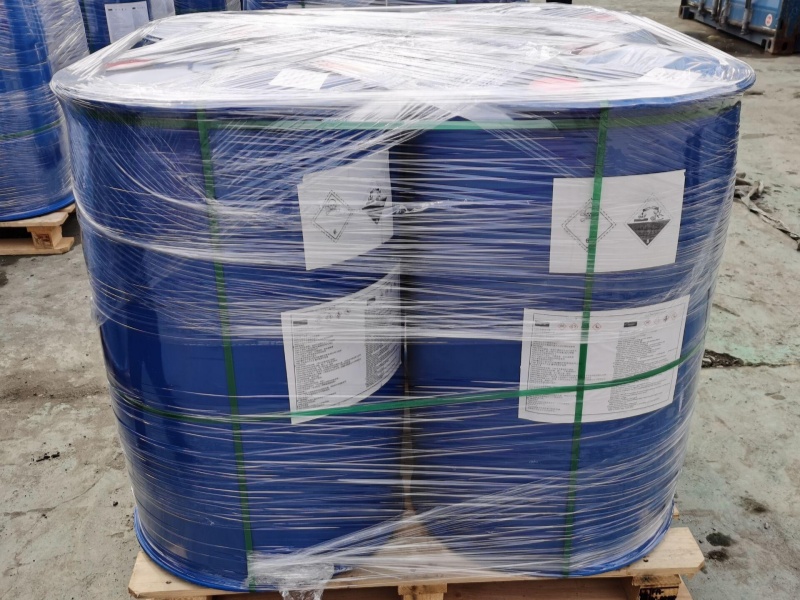
| Standard pack | Plastic drum, 200 kg net |
The foreign designation is listed for identification only. It carries no endorsement of goods sold under that name, and no exclusion of alternatives.
Buyers often ask how this grade differs from the methoxy member sold under the A-1170 designation, which carries CAS 82985-35-1 and a relative molecular mass of 341.55. Alkoxy length sets the hydrolysis rate, so a data sheet for one says nothing about the other.
3. Constants, and what a drift is telling you
Two laboratories rarely disagree by accident. They disagree because they worked to different methods, so state the method.
| Constant | Figure | Stated condition |
|---|---|---|
| Specific gravity | 0.970 | 25 °C |
| Boiling point | 408.3 °C | — |
| Refractive index | 1.429 | nD at 25 °C |
| Flash point | 200.57 °C | Closed cup |
Specific gravity is the cheapest screen available: a move in the third decimal means the drum has taken up water and begun condensing. Refractive index answers from the other side and drifts the same way. Colour is cruder still — a shade deeper than pale yellow points at the same reaction.
A closed-cup flash point of 200.57 °C places this material away from the flammable band, which relaxes storage classification but not handling care. Solubility extends to alcohols and ketones. Water acts as the reagent rather than the solvent, so a pre-hydrolysis solution is made in alcohol.
4. Dosage counted against a named mass
A percentage quoted without a denominator cannot be reproduced in another plant, and most dosage disputes turn on the denominator rather than the grade. The figures below open a first trial; they are not validated values.
| Formulation | Counted against | Range to open at | What appears past the useful point |
|---|---|---|---|
| Mineral-filled thermoset or rubber | Mass of filler | 0.5% – 1.5% | Dispersion stops improving while viscosity climbs |
| Reinforced plastic laminate | Mass of fibre | 0.5% – 1.5% | Wet-out slows and the surface stays matt |
| Sealant or adhesive body | Mass of the binder | 0.5% – 1.5% | Rheology shifts as the network closes early |
At 1% counted on filler, a 200 kg charge calls for 2 kg of this grade. The same 2 kg against a 2,000 kg binder reads as 0.1% and leaves the interface short. Run two or three levels and read the shape of the curve, not a single point.
5. Packing, trade terms and papers
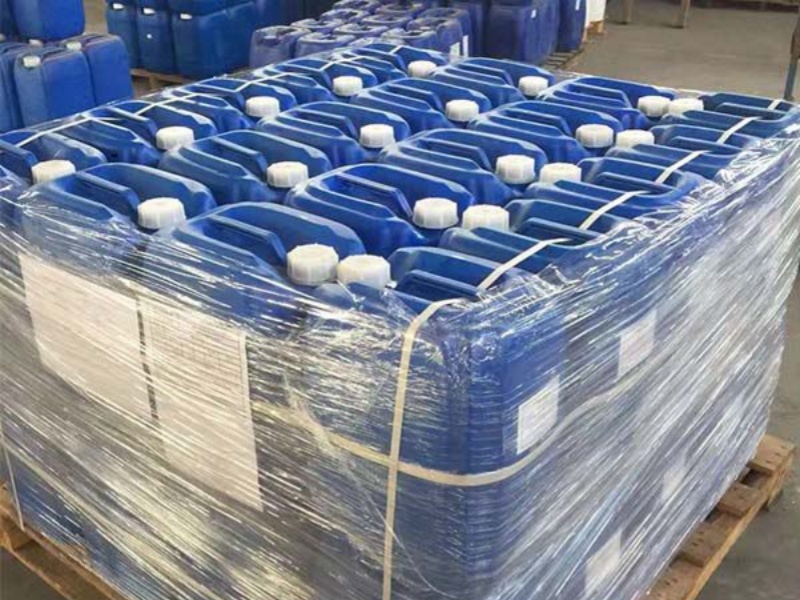
The standard pack is a plastic drum at 200 kg net. Other sizes are scheduled against the order rather than held in stock, so put the required format on the enquiry when a receiving bay cannot take a full drum. Quoted by mass.
Terms follow what you ask for. FOB carries the goods through loading on board at the named port and leaves freight and the marine leg with the buyer. CIF adds freight and cover to the destination port. EXW leaves collection from the works with the buyer. Send the destination port and receiving hours; inland delivery is arranged separately. Each consignment travels with a certificate of analysis and a safety data sheet, and the batch number on both matches the drum.
6. Storage, rotation and incoming checks
Keep the drum sealed, cool, ventilated and dry, protected from moisture and fire hazards. A closed drum holds its assay; an open one does not, and the amine group reacts first with what the air brings in. Rotate stock so the oldest moves first.
Three checks are worth running first:
Add a chromatographic assay when the batch is new to the plant. Keep a retained sample from the first drum of every batch; an adhesion question raised six months later is settled easily against that sample and awkwardly against a certificate.
FAQ
Our compound reads a higher viscosity than the control. Is this grade overdosed?
Overdosage is one reading, not the only one. Higher viscosity also follows partial hydrolysis of the silane ends, or a filler that was never dried. Run specific gravity and refractive index on the drum first; if those sit on the figures, look at filler moisture and at the order in which the two were added.
Our laboratory reports 97.8% where the sheet states ≥98%. Is the drum off specification?
Not on one reading. The purity figure is method-dependent, and a different column, an integration window or an overloaded injector all report low on the same material. Run a blind duplicate against a drum that passed incoming checks, and ask which method produced your number.
Can you ship drums smaller than 200 kg for a 300 kg pilot batch?
Yes, subject to the production schedule. Sizes other than the 200 kg standard pack are made against the order rather than pulled from stock, so state the quantity and format on the enquiry and packing is arranged around it. A sample drum can be drawn from a batch.
What Incoterm do you quote, and how many drums go on a pallet?
Terms are quoted as asked: FOB through loading on board at the named port, CIF adding freight and cover to the destination port, or EXW with collection from the works left to the buyer. Pallet pattern and drums per pallet are fixed on the quotation, since both follow the destination.
Further reading
Send the substrate, the binder and the annual volume to our export desk and we will reply with the grade sheet, a sample and a written starting point.
