


 Chinese


Products Description
Anilino-methyl-triethoxysilane is an α-type silane coupling agent containing an aniline functional group, with a CAS number of 3473-76-5 and molecular formula C₁₃H₂₃NO₃Si, and a molecular weight of 269.412. It appears as a light yellow transparent liquid, with a density of 1.0±0.1 g/cm³, boiling point of 315.3±25.0°C, and flash point of 144.5±23.2°C. It should be stored sealed at 2–8°C. In this compound, the functional group is linked to the silicon atom via a methylene bridge. The alkoxy groups exhibit higher reactivity than those in γ-type silane coupling agents, resulting in faster crosslinking rates and excellent thermal stability. It is widely used in room-temperature vulcanizing (RTV) silicone rubber, glass fiber-reinforced plastics, epoxy resin adhesives, and modified phenolic resin sand systems, effectively enhancing the mechanical strength and water resistance of materials. Additionally, it is employed in environmental analysis for the preparation of Fe₃O₄NPs@SiO₂-AMTS magnetic nanocomposites, supporting the detection of phthalate esters in water by high-performance liquid chromatography-mass spectrometry (HPLC-MS).
1. Product Information
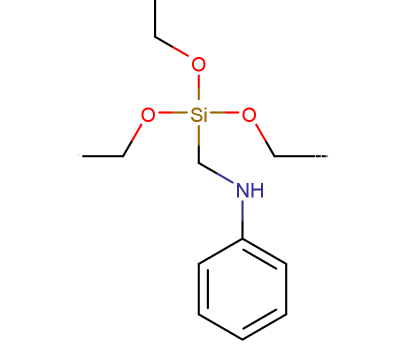
● Chemical Name: Anilino-methyl-triethoxysilane
● Synonyms: (N-Phenylamino)methyltriethoxysilane; N-(Triethoxysilylmethyl)aniline; N-phenylaminomethyltriethoxysilane
● CAS No.: 3473-76-5
● Molecular Formula: C₁₃H₂₃NO₃Si
● Molecular Weight: 269.41 g/mol
● EINECS No.: 810-202-8
● Structural Formula:
2. Physical and Chemical Properties
● Appearance: Colorless to light yellow transparent oily liquid
● Density: 1.004–1.025 g/cm³ (at 25°C)
● Specific Gravity: 1.004–1.021
● Boiling Point: 132–142°C (at 4 mmHg); approximately 315.3°C under atmospheric pressure
● Flash Point: 144.5°C (closed cup)
● Refractive Index (nD²⁵): 1.4857–1.4875
● Solubility: Soluble in most organic solvents such as alcohols, ketones, esters, and hydrocarbons; insoluble in water
● Hydrolysis Sensitivity: Level 7 (reacts slowly with moisture)
● Acidity Constant (pKa): Predicted value ~4.15 ± 0.50
3. Product Characteristics and Mechanism of Action
Anilino-methyl-triethoxysilane is an α-type silane coupling agent bearing an aniline functional group. The aniline moiety is connected to the silicon atom through a methylene (–CH₂–) spacer. Due to its α-configuration, the alkoxy groups attached to silicon display higher reactivity compared to γ-type silane coupling agents, offering the following advantages:
● Faster hydrolysis and condensation rates, suitable for room-temperature crosslinking systems;
● Excellent high-temperature stability;
● Strong interfacial adhesion promotion, significantly improving the bonding between organic resins and inorganic substrates.
Mechanism of Action:The siloxane group hydrolyzes to form silanol, which then condenses with hydroxyl groups on inorganic surfaces (e.g., glass, metal oxides) to form stable Si–O–substrate bonds. Meanwhile, the aniline group can participate in crosslinking reactions with epoxy, phenolic, melamine, and other resin systems. This dual reactivity enables the molecule to act as a "molecular bridge," substantially enhancing the mechanical performance and durability of composite materials.
4. Major Application Areas
1. Rubber and Elastomers:
Used in room-temperature vulcanizing (RTV) silicone rubber systems to improve adhesion to substrates such as metals and glass.
2. Composites:
○ As a surface treatment agent in glass fiber-reinforced plastics (FRP) to enhance water resistance and mechanical strength;
○ Improves dispersion and interfacial adhesion of inorganic fillers (e.g., silica, calcium carbonate) in resin matrices.
3. Adhesives and Sealants:
Acts as a tackifier and modifier for epoxy, phenolic, nylon, and melamine-based adhesives and sealants.
4. Coatings and Surface Modification:
Applied in high-temperature resistant, anti-corrosion, and functional coatings to improve adhesion and environmental stability.
5. Environmental Analytical Materials:
○ Used in the synthesis of Fe₃O₄@SiO₂-AMTS magnetic nanocomposites for the extraction and pre-concentration of phthalate esters in aqueous samples;
○ Enables sensitive detection via HPLC-MS, improving analytical efficiency and accuracy.
5. Storage and Packaging
● Storage Conditions:
○ Store sealed in a cool, dry, and light-protected environment;
○ Recommended storage at 2–8°C under inert gas atmosphere (e.g., nitrogen or argon);
○ Avoid contact with moisture, heat sources, flames, and strong acids or bases;
○ Shelf life: generally 6 months (subject to manufacturing date).
● Packaging Options:
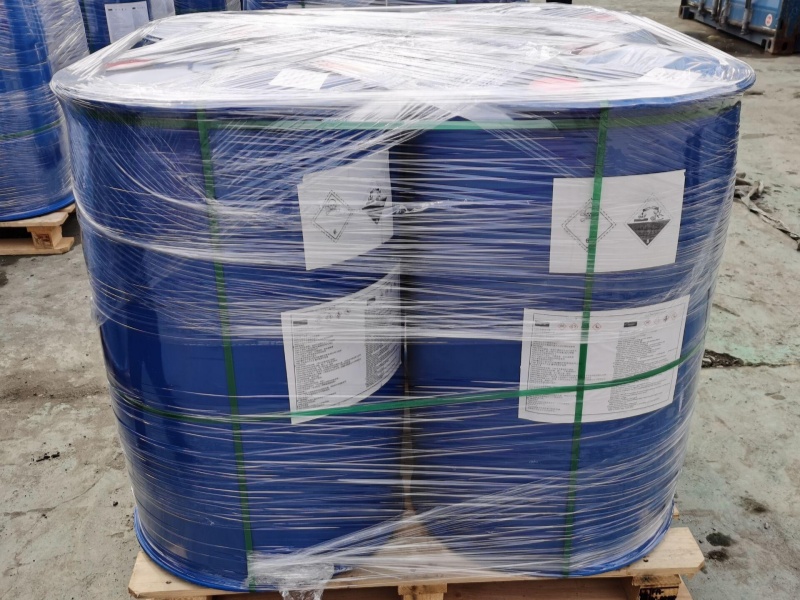
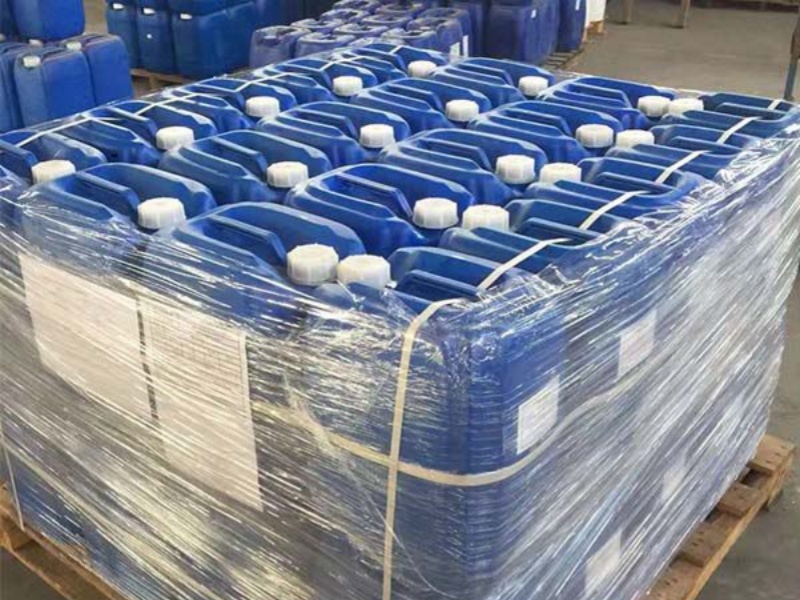
○ 20 kg, 200 kg plastic or iron drums;
○ 1000 kg IBC totes also available;
○ Customized packaging can be provided upon customer request.
Notes:
● The information provided in this document is compiled from currently available data. For the most up-to-date safety information, please request the latest Safety Data Sheet (SDS/MSDS) before use;
● It is recommended to conduct laboratory-scale testing prior to full-scale industrial application.
