


 Chinese


Sourcing engineers evaluating silane coupling agent suppliers must distinguish between true chemical synthesis and simple toll blending to ensure consistent product specifications. A valid audit requires verifying continuous distillation columns, gas chromatography purity logs, and closed-loop solvent recovery systems. Facilities lacking these infrastructure elements typically introduce batch-to-batch moisture variations. Evaluating reactor design and analytical equipment provides a reliable boundary for confirming genuine synthesis capabilities and securing stable supply for overseas formulations.
Table of Contents
- 1. Identifying True Synthesis Versus Blending Operations
- 2. Evaluating Analytical and Quality Control Infrastructure
- 3. Verifying Specification Compliance and Grade Constants
- 4. Assessing Storage and Moisture Control Protocols
- 5. Packaging, Trade Terms, and Export Logistics
- 6. Reviewing Batch Traceability and Documentation
1. Identifying True Synthesis Versus Blending Operations
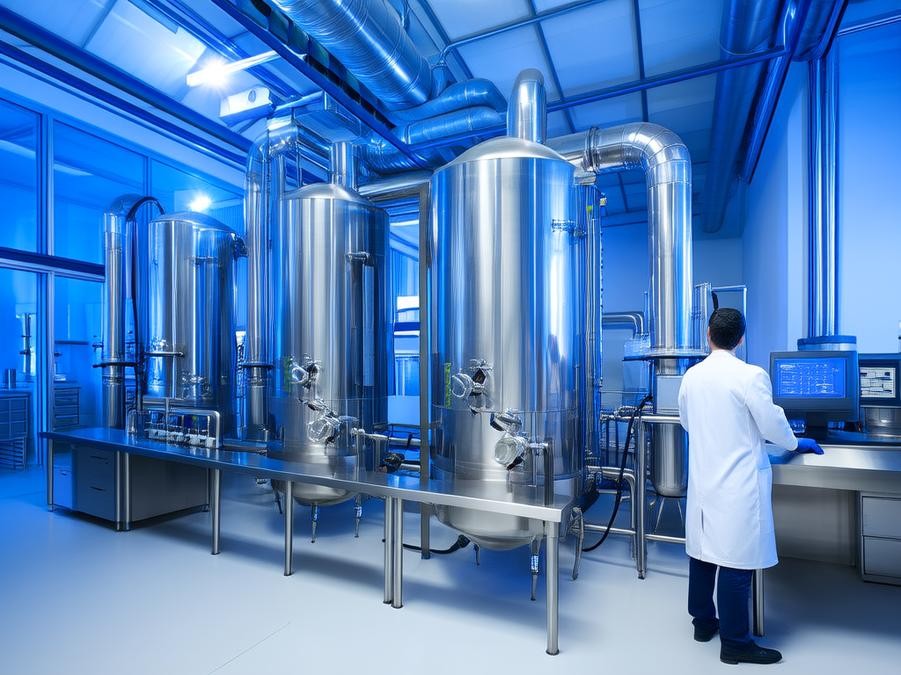
Silane synthesis involves complex chemical reactions, whereas blending merely mixes pre-made chemicals. During an audit, inspect the reactor hall. Synthesis facilities utilize stainless steel or glass-lined reactors equipped with reflux condensers and precise temperature control jackets. Blending facilities typically contain only standard mixing tanks.
| Equipment Type | Synthesis Facility Requirement | Blending Facility Characteristic |
|---|---|---|
| Reactor Vessels | Glass-lined or 316L stainless steel with reflux condensers | Standard carbon steel or basic stainless mixing tanks |
| Temperature Control | Automated jacketed heating and cooling with tight tolerance | Manual steam or basic water cooling |
| Distillation Units | Continuous or batch fractional distillation columns for purification | Absent or limited to simple solvent recovery |
2. Evaluating Analytical and Quality Control Infrastructure
The analytical lab dictates the reliability of the Certificate of Analysis. Verify that the facility operates a Gas Chromatograph with a Flame Ionization Detector and a Karl Fischer titrator. For standard grades, GC area purity must read above 98.5%, and moisture must remain below 200 ppm. These specifications are valid only when instruments are calibrated weekly using NIST-traceable reference standards.
3. Verifying Specification Compliance and Grade Constants
When sourcing silane coupling agents for overseas formulation, verifying the exact chemical parameters is essential to ensure the material meets your specific application requirements. The specification compliance of a silane grade is defined by its chemical identity, functional group behavior, and physical constants.
For laboratory evaluations, we supply laboratory samples exclusively as 100 g bottles. A quantity of 50 g is sufficient for a small trial to verify compatibility with your resin or filler system. We do not supply 500 g or 1 kg sample sizes.
The following table outlines the public constants for our standard commercial grades. The recommended dosage range for general inorganic filler treatment is 0.5%-1.5% of the inorganic filler weight. When using aminosilanes in aqueous systems, the dosage should be adjusted to 0.3%-1%.
It is critical to note that aminosilanes, including KH-550, KH-540, and KH-792, are inherently basic. Their aqueous solutions are alkaline, and no pH adjustment is made during hydrolysis. Never adjust the pH into an acidic range for these grades. If an acidic system or a longer pot life is genuinely required, the neutral epoxy silane KH-560 should be utilized instead. For non-amino silanes like KH-560 and KH-570, pH adjustment to 4-5 is appropriate.
| Grade | CAS Number | Chemical Name | Molecular Formula | Functional Group | Purity | Recommended Dosage Range |
|---|---|---|---|---|---|---|
| KH-550 / A-1100 | 919-30-2 | gamma-aminopropyltriethoxysilane | C9H23NO3Si | amino (basic) | > 98.5% | 0.5%-1.5% of filler weight |
| KH-540 / A-1120 | 13822-56-5 | gamma-aminopropyltrimethoxysilane | C8H21NO3Si | amino (basic) | > 98.5% | 0.5%-1.5% of filler weight |
| KH-792 / A-1130 | 1760-24-3 | N-(2-aminoethyl)-3-aminopropyltrimethoxysilane | C8H22N2O3Si | diamino (basic) | > 98.5% | 0.5%-1.5% of filler weight |
| KH-560 / A-187 | 2530-83-8 | gamma-glycidoxypropyltrimethoxysilane | C9H20O5Si | epoxy (neutral) | > 98.5% | 0.5%-1.5% of filler weight |
| KH-570 / A-174 | 2530-85-0 | gamma-methacryloxypropyltrimethoxysilane | C10H20O5Si | methacryl | > 98.5% | 0.5%-1.5% of filler weight |
4. Assessing Storage and Moisture Control Protocols
Silanes hydrolyze readily in the presence of moisture. Finished goods storage must utilize nitrogen blanketing to prevent degradation. Verify the pressure regulators on the storage tanks and the sealing integrity of the drumming area. These moisture limits apply strictly to unopened drums stored in a climate-controlled warehouse between 15°C and 25°C.
5. Packaging, Trade Terms, and Export Logistics
Proper packaging and clear trade terms are fundamental to maintaining chemical integrity during international transit. Our standard packaging includes 25 kg HDPE drums and 200 kg steel drums, both sealed with nitrogen blanketing to prevent moisture ingress.
For pallet loading, 25 kg drums are stacked with 80 drums per pallet, yielding 2,000 kg per pallet. A 20-foot container holds 10 pallets, totaling 20 metric tons. Alternatively, 200 kg drums are loaded with 4 drums per pallet, yielding 800 kg per pallet, allowing a 20-foot container to hold 8 metric tons.
We support standard Incoterms, primarily FOB Guangzhou and CIF destination port. Commercial documentation, including the COA and MSDS, is supplied with every shipment. Laboratory samples are supplied as 100 g bottles only. Production lead times are subject to confirmation at the time of order.
6. Reviewing Batch Traceability and Documentation
Traceability ensures that any field failure can be tracked back to raw material inputs. Request to see the Distributed Control System logs for a recent production batch. Manual logbooks indicate poor traceability. The provided Certificate of Analysis must mathematically align with the raw material intake logs and the in-process chromatograms saved in the laboratory information management system.
FAQ
We changed to a new batch of fumed silica; does the silane coupling agent dosage need to be adjusted?
Yes, the dosage must be adjusted. The specific surface area and moisture content of fumed silica can fluctuate between batches, which affects the optimal dosage. It is recommended to conduct a small-scale trial with the new batch to verify the exact dosage before full-scale production.
Is stating 98% purity on the purchase specification sufficient, or why do export orders require a separate moisture limit?
A 98% purity level is generally insufficient to control moisture, as the remaining portion may contain water or alcohols. Excess moisture can trigger self-polymerization inside the drum and reduce the effective silicon content. Therefore, export orders typically list a separate moisture specification, with the exact upper limit defined by the specification sheet.
Does adding the silane coupling agent before or after the resin affect the final interface performance?
Yes, it affects the interface. The silane must first be hydrolyzed to treat the filler or glass fiber before adding the resin. If mixed directly into the resin, the coupling agent cannot fully hydrolyze, resulting in insufficient interface bonding strength. Always follow the correct process sequence for adding materials.
After 500 hours in an 85/85 reliability test, the peel strength dropped significantly; how should we troubleshoot the root cause?
First, check the grade selection and hydrolysis process: verify if an aminosilane was incorrectly selected, or if the pH for non-amino silanes is correctly maintained between 4 and 5. Next, inspect whether the moisture content of the filler exceeds the acceptable limits.
The pre-hydrolyzed silane solution turned slightly cloudy after sitting for two days; can it still be added directly to the UV resin?
No, it cannot be used. Cloudiness indicates that the silane has undergone excessive self-polymerization. Adding it to the UV resin will fail to form effective interface bonds and will interfere with the curing process. The solution must be discarded and remade, prepared immediately before use.
Further Reading
- How to Choose the Right Silane Coupling Agent for Your Resin
- What Documents Come with a Silane Coupling Agent Shipment
- Managing Silane Coupling Agent Cost Volatility: Three Formulation Response Paths
- Silane Coupling Agent Purity Grades and Their Impact
- Choosing a Silane Coupling Agent for Epoxy Systems
- Silane Coupling Agent: Grade Selection for Fiberglass Matrices
- Silane Coupling Agent Specifications: What Buyers Should Check
- How Silane Coupling Agents Bond Inorganic Fillers to Polymers
