


 Chinese


How can overseas sourcing engineers verify incoming liquid silane coupling agent purity without waiting for chromatography? Measuring the refractive index at a controlled temperature provides a rapid physical screening method. A deviation exceeding ±0.002 from the standard value at 20 °C indicates contamination by hydrolyzed oligomers or moisture, allowing immediate batch evaluation before formulation. This guide details the measurement conditions, standard values, and commercial specifications for ordering these materials.
Table of Contents
- 1. Specification Compliance and Trade Parameters
- 2. Packaging, Pallet Loading and Incoterms
- 3. The Physics of Refractive Index in Silanes
- 4. Standard Refractive Index Values for Common Silanes
- 5. Measurement Conditions and Equipment Requirements
- 6. Interpreting Deviations and Identifying Contaminants
- 7. Limitations of Refractive Index Testing
1. Specification Compliance and Trade Parameters
To ensure incoming materials meet formulation specifications, sourcing engineers require verifiable physical and chemical parameters. The following table outlines the standard specification compliance data for our primary silane grades. All purity values are determined via gas chromatography at the time of dispatch, and net weights reflect the standard commercial drum size. These parameters provide a baseline for incoming quality control. The molecular formula confirms the exact stoichiometric ratio of the silane, ensuring no unexpected side-products are present. Purity thresholds are strictly maintained to prevent premature condensation during storage. When evaluating these specifications, formulation chemists must consider that minor variations in moisture content can significantly alter the effective purity over time if the packaging is compromised. Sourcing engineers should retain a sample from each batch for future reference, as test-dependent metrics such as exact saponification value, grafting ratio, or APHA colour must be measured against the specific retention sample rather than a generic catalog value.
| Parameter | KH-550 (A-1100) | KH-560 (A-187) | KH-570 (A-174) |
|---|---|---|---|
| Chemical Name | gamma-aminopropyltriethoxysilane | gamma-glycidoxypropyltrimethoxysilane | gamma-methacryloxypropyltrimethoxysilane |
| CAS Number | 919-30-2 | 2530-83-8 | 2530-85-0 |
| Molecular Formula | C9H23NO3Si | C9H20O5Si | C10H20O5Si |
| Purity (GC) | ≥ 98.0% | ≥ 98.0% | ≥ 98.0% |
| Net Weight (Drum) | 200 kg | 200 kg | 200 kg |
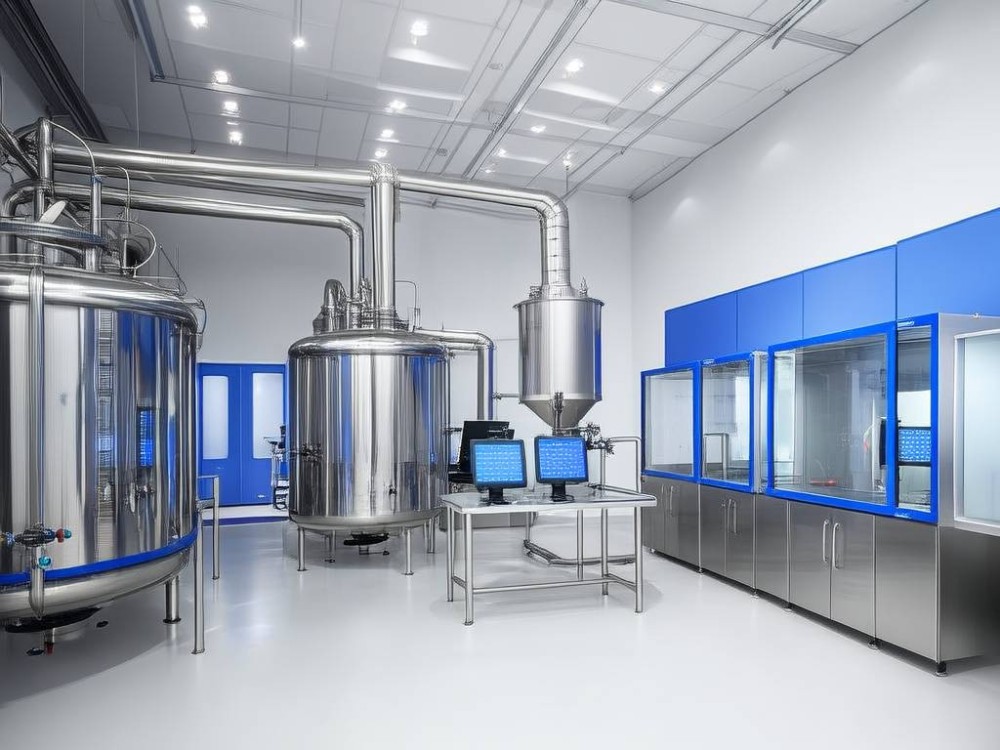
2. Packaging, Pallet Loading and Incoterms
Commercial shipments of liquid silane coupling agents are standardized to facilitate global logistics and ensure product integrity during transit. The primary packaging consists of 200 kg net weight drums constructed from either lined steel or high-density polyethylene (HDPE) to prevent moisture ingress. For larger volume requirements, 1000 kg IBC (Intermediate Bulk Container) drums are utilized. Ensuring the correct Incoterm is selected prior to order placement prevents unexpected logistical costs and clarifies the transfer of risk during international transit.
Regarding pallet loading, a standard 20-foot shipping container can hold 80 drums (totaling 16 metric tons) when secured on standard EUR-pallets. If floor-loaded without pallets to maximize space, the same container can accommodate up to 100 drums (20 metric tons). International trade is conducted under standard Incoterms. FOB (Free On Board) is applied when the buyer manages the primary ocean freight, while CIF (Cost, Insurance, and Freight) is used when the seller arranges transport to the destination port.
Laboratory evaluation samples are strictly supplied as 100 g glass bottles only; 50 g is adequate for a small trial. Certificates of Analysis (COA) and Material Safety Data Sheets (MSDS) are supplied with every commercial shipment. Proper storage is critical to maintaining these specifications. Drums must be kept sealed in a cool, dry, and well-ventilated area, away from direct sunlight and moisture. Production lead times are subject to confirmation at the time of order.
3. The Physics of Refractive Index in Silanes
The refractive index quantifies the velocity of light as it passes through a specific medium, a property directly governed by the electron density of the constituent molecules. Unadulterated silane coupling agents feature a precise molecular architecture, which yields a uniform electron density and a highly predictable refractive index. The introduction of impurities—such as ambient moisture, residual alcohols, or self-condensed siloxane oligomers—modifies the bulk electron density of the liquid phase. Because this optical relationship remains consistent for clear, single-phase liquids at a defined temperature, refractive index serves as a highly effective physical proxy for verifying chemical purity during incoming quality control.
4. Standard Refractive Index Values for Common Silanes
The following tables list the public constants and typical refractive index ranges for standard commercial silane grades. These optical ranges apply to fresh, unhydrolyzed product stored under inert gas at standard conditions.
| Grade | CAS Number | Chemical Name | Functional Group | Density (25°C) | Boiling Point | Recommended Dosage Range |
|---|---|---|---|---|---|---|
| KH-550 / A-1100 | 919-30-2 | gamma-aminopropyltriethoxysilane | amino (basic) | 0.946 g/cm³ | 217°C | 0.5%-1.5% of inorganic filler weight |
| KH-540 / A-1120 | 13822-56-5 | gamma-aminopropyltrimethoxysilane | amino (basic) | 0.946 g/cm³ | 210°C | 0.5%-1.5% of inorganic filler weight |
| KH-792 / A-1130 | 1760-24-3 | N-(2-aminoethyl)-3-aminopropyltrimethoxysilane | diamino (basic) | 1.045 g/cm³ | 125°C | 0.5%-1.5% of inorganic filler weight |
| KH-560 / A-187 | 2530-83-8 | gamma-glycidoxypropyltrimethoxysilane | epoxy (neutral) | 1.070 g/cm³ | 120°C | 0.5%-1.5% of inorganic filler weight |
| KH-570 / A-174 | 2530-85-0 | gamma-methacryloxypropyltrimethoxysilane | methacryl | 1.045 g/cm³ | 115°C | 0.5%-1.5% of inorganic filler weight |
| Silane Grade | Chemical Name | CAS Number | Refractive Index @ 20 °C |
|---|---|---|---|
| A-171 | Vinyltrimethoxysilane | 2768-02-7 | 1.380 - 1.384 |
| A-151 | Vinyltriethoxysilane | 78-08-0 | 1.395 - 1.399 |
| A-1100 | Gamma-aminopropyltriethoxysilane | 919-30-2 | 1.448 - 1.452 |
| A-174 | Gamma-methacryloxypropyltrimethoxysilane | 2530-85-0 | 1.449 - 1.453 |
5. Measurement Conditions and Equipment Requirements
Precise temperature regulation represents the most critical variable in refractive index analysis. For standard silane liquids, the refractive index shifts by approximately -0.0004 for every 1 °C increase in ambient temperature. Consequently, measurements are only considered valid when the sample temperature is strictly stabilized at 20.0 ± 0.1 °C. Achieving this tolerance requires an Abbe refractometer integrated with a thermostatic water bath circulation system. Relying on manual ambient temperature adjustments or uncalibrated handheld devices will introduce unacceptable error margins, rendering the purity assessment invalid for precision adhesive formulations.
6. Interpreting Deviations and Identifying Contaminants
When a refractive index measurement deviates from the certified specification, the directional shift provides critical clues regarding the likely contaminant.
| Contaminant Category | Effect on Refractive Index | Typical Shift Magnitude |
|---|---|---|
| Moisture and hydrolysis products | Decreases RI | -0.003 to -0.010 |
| Unreacted alcohols (e.g., methanol, ethanol) | Decreases RI | -0.005 to -0.015 |
| Higher boiling siloxane oligomers | Increases RI | +0.002 to +0.008 |
A refractive index deviation exceeding ±0.002 from the certified specification at 20 °C definitively indicates that the silane has undergone partial hydrolysis or contains significant impurities. Such batches are unsuitable for precision adhesive formulations and should be flagged for further investigation or returned.
7. Limitations of Refractive Index Testing
Although highly effective for rapid bulk screening, refractive index is fundamentally a bulk physical property and cannot identify the specific chemical nature of an impurity. It is incapable of detecting trace metallic contaminants or non-volatile solid particulates if they fall below the optical detection threshold of the instrument. Furthermore, it cannot verify the integrity of the organofunctional group. Therefore, refractive index testing must be strictly utilized as a preliminary screening tool. Definitive identification of contaminants and precise moisture quantification require advanced analytical techniques such as gas chromatography or Karl Fischer titration.
FAQ
The pre-hydrolyzed silane solution turned white and precipitated after two days - can I still add it to the resin?
No. The whitening indicates that the silanol has self-condensed to form polysiloxanes, losing its ability to react with the filler. It is recommended to prepare the solution immediately before use and discard it if it exceeds the time limit.
The purchased silane coupling agent developed a precipitate after six months in storage - is it invalid?
The nature of the precipitate must be confirmed first. If it is a self-condensation product of the silane, it has lost coupling activity and should be discarded; if it is low-temperature crystallization, it can still be used after warming and melting, provided there is no layering. Storage must be sealed, light-proof, cool, and dry.
Is there a universal starting dosage for silane coupling agents?
There is no universal fixed starting dosage. The amount must be calculated based on the specific surface area and surface hydroxyl density of the filler, or determined through gradient small-scale trials, as differences between systems are significant.
Why does the silane grafting work in the lab but fail during pilot plant scale-up?
Shear forces and heat transfer conditions change during scale-up production. It is recommended to check if the pH of the hydrolyzate is appropriate (4~5 for non-amino, no adjustment for amino) and confirm that the drying temperature is uniform to avoid local overheating.
Why can't I just reuse the exact same silane dosage from our previous batch formulation?
Because the specific surface area, surface hydroxyl density, and moisture content of the filler may vary between different batches or systems, which will change the optimal usage amount. It is necessary to re-verify through small-scale trials.
Further Reading
- Shipping and Storage Requirements for Silane Coupling Agents
- Brief: HS Code and Customs Notes for Silane Coupling Agents
- Silane Coupling Agent Purity Grades and Their Impact
- Silane Coupling Agents for Filler Surface Treatment
- How to Choose the Right Silane Coupling Agent for Your Resin
- Choosing a Silane Coupling Agent for Epoxy Systems
- Silane Coupling Agent: Grade Selection for Fiberglass Matrices
- Silane Coupling Agent Specifications: What Buyers Should Check
