


 Chinese


Products Description
Two checks settle whether a Methyltrimethoxysilane drum earns a place on your line: whether your own laboratory still reads 98% by gas chromatography on arrival, and whether the pack size suits the batch you run. This page answers in the order a buyer really works — substrate fit first, then the identity figures you can verify on a certificate, then what those figures mean for dosing, packing and the checks that run on arrival. CAS 1185-55-3, a relative molecular mass of 136.2 and a boiling point of 102 °C identify this grade.
Table of contents
- 1. Start from what you are compounding
- 2. Figures that travel with the drum
- 3. Reading a number that has drifted
- 4. Dosage, and the mass it counts against
- 5. Packing, terms and papers
- 6. Keeping stock, and checking on arrival
- Specific gravity at 25 °C against 0.95.
- Refractive index at 25 °C against 1.3695 – 1.3715.
- Haze or gel at the neck — hold a hazy drum for sampling rather than filtering it in.
- Methyltriethoxysilane, technical data and packing options
- EP-15 Ethyltriacetoxysilane CAS 17689-77-9
- EP-16 Propyltriacetoxysilane CAS 17865-07-5
- EP-10 Methyltriacetoxysilane CAS 4253-34-3
- EP-26 1,2-Bis(trimethoxysilyl)ethane CAS 18406-41-2
- EP-27 1,2-Bis(triethoxysilyl)ethane CAS 16068-37-4
- EP-28 Dimethyldimethoxysilane CAS 1112-39-6
1. Start from what you are compounding
This grade works at an interface. Two phases have to be joined: an inorganic surface such as fibre, mineral filler or a metal oxide, and an organic network that has to set around it. Moisture opens the route; condensation closes it. Begin with the compound, and the use follows.
In a one-component RTV silicone rubber this grade carries the curing. On fibre it functions as a surface treatment. In reinforced plastic laminates it works as a processing aid, and the finished part gains mechanical strength, heat resistance and moisture resistance. On inorganic surfaces it behaves as a hydrophobic agent. Around pigment it acts as a dispersing aid, which is where much masterbatch waste originates: an agglomerate that has set will not come apart under shear later. Each route gives off methanol as the alkoxy groups react, so plan ventilation around that. The second question is which phase is continuous and which is the filler. Send substrate, binder and process temperature, and we will say whether this member fits.
2. Figures that travel with the drum
Trade names migrate between suppliers, so match the registry number, not the label.
| Field | Value |
|---|---|
| Chemical name | Methyltrimethoxysilane |
| Molecular formula | C₄H₁₂O₃Si |
| Relative molecular mass | 136.2 |
| CAS No. | 1185-55-3 |
| Purity | 98%, by gas chromatography |
| Appearance | Liquid, colourless and transparent |
| Equivalent foreign designations | A-163 (Union Carbide), Z-6070 (Dow Corning), KBM-13 (Shin-Etsu Chemical, Japan) |
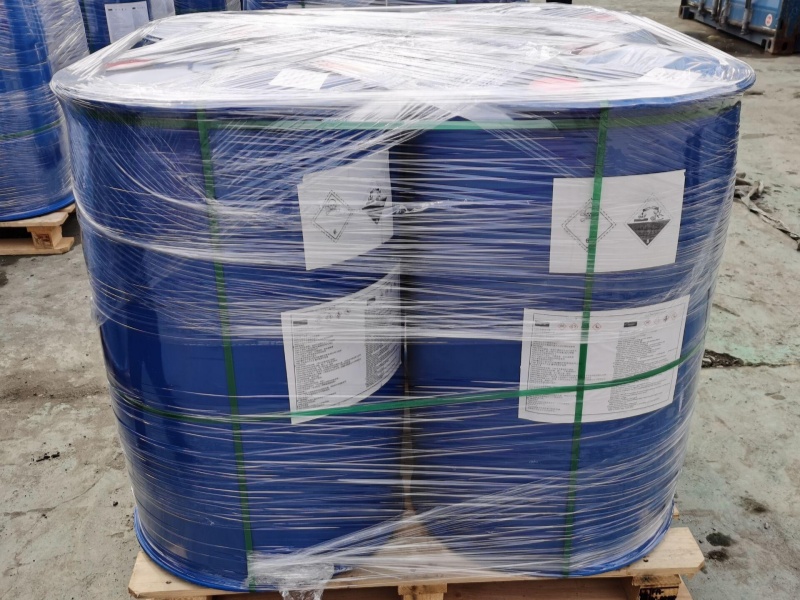
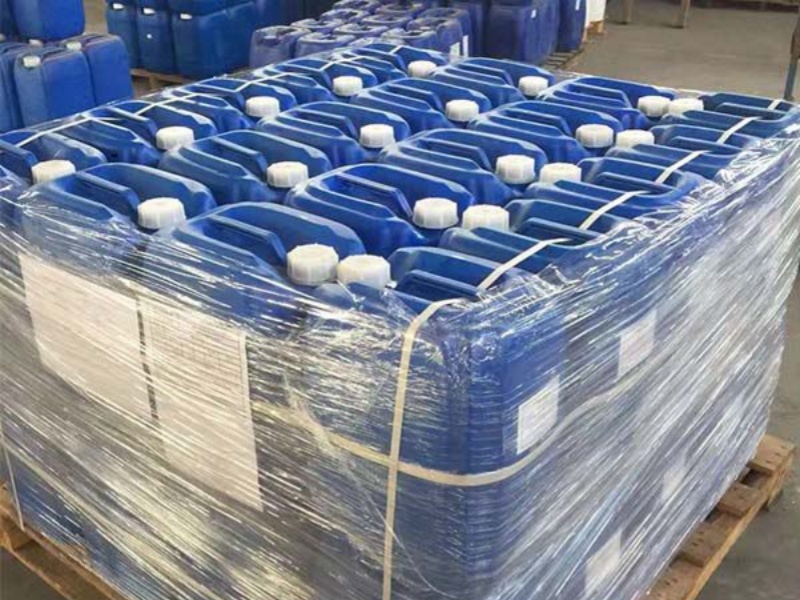
| Standard pack | Plastic drum, 5 kg / 25 kg / 200 kg net |
The three names in the last field identify the same substance for reference. They carry no endorsement of goods sold under them, and no exclusion of alternatives.
3. Reading a number that has drifted
Two papers rarely disagree by accident. They disagree because two laboratories worked to different methods.
| Constant | Figure | Stated condition |
|---|---|---|
| Specific gravity | 0.95 | 25/25 °C |
| Boiling point | 102 °C | — |
| Refractive index | 1.3695 – 1.3715 | nD at 25 °C |
| Flash point | 11 °C | Closed cup |
A closed-cup figure is not an open-cup estimate, so state which method was used. Specific gravity is the cheapest screen on the list: a shift in the third decimal signals that hydrolysis has bitten into the drum. Refractive index moves for the same reason and in the same direction. Solubility runs to alcohols and ketones — methanol, ethanol, acetone and benzene are in scope — while water acts as the reagent rather than the solvent, which is why a pre-hydrolysis solution is made in alcohol. A flash point of 11 °C puts the drum in a store that must carry fire precautions.
4. Dosage, and the mass it counts against
A percentage quoted without a denominator cannot be reproduced in another plant, and most dosage arguments turn on the denominator rather than the grade. Name the mass every time. The figures below open a first trial, not validated values.
| Formulation | Counted against | Range to open at | What appears past the useful point |
|---|---|---|---|
| Mineral-filled thermoset or rubber | Mass of filler | 0.5% – 1.5% | Viscosity climbs while strength and modulus flatten |
| Reinforced plastic laminate | Mass of fibre | 0.5% – 1.5% | Wet-out slows and the surface stays matt |
| One-component RTV silicone rubber | Mass of the silicone rubber | 0.5% – 1.5% | Cure rate shifts as the catalyst balance is disturbed |
At 1% counted on filler, a 200 kg charge calls for 2 kg of silane; the same 2 kg against a 2,000 kg binder reads as 0.1% and leaves the interface short. Run two or three levels and read the shape of the curve, not a single point.
5. Packing, terms and papers
Standard packing is a plastic drum at 5 kg, 25 kg or 200 kg net. Other sizes are scheduled against the order rather than held in stock, so put the required format on the enquiry when a receiving bay cannot take a full drum. This grade is quoted by net weight.
Terms follow what you ask for. FOB carries the goods through loading on board at the named port and leaves freight and the marine leg with the buyer. CIF adds freight and cover to the destination port. EXW leaves collection from the works with the buyer. Send the destination port and receiving hours; inland delivery is arranged separately. Each consignment travels with a certificate of analysis and a safety data sheet, and the batch number on both matches the drum.
6. Keeping stock, and checking on arrival
Keep the drum sealed, cool, ventilated and dry, away from moisture and fire hazards. Methanol leaves as the methoxy groups react, so an open drum loses assay and gains viscosity at once. Rotate stock so older drums move first, and open a drum only as long as the closure needs.
Three checks are worth running before the drum enters the line:
Add a chromatographic assay against the 98% figure when the batch is new to the plant. Keep a retained sample from the first drum of every batch, because an adhesion question six months later is settled easily against a retained sample and awkwardly against a certificate.
FAQ
Our RTV cure runs faster than it did with last year's drum. What changed?
Faster cure usually means more silanol than the formulation intended, not a stronger batch. Damp air reaching a previously opened drum moves the methoxy groups ahead of schedule, and the free silanol condenses onto the network faster than the intended catalyst route. Read specific gravity and refractive index first.
Our laboratory reads 97.6% where the sheet states 98%. Is the drum off specification?
Not on one reading. The 98% figure is method-dependent: a different column, an integration window or an overloaded injector all report low on the same material. Run a blind duplicate against a drum that passed incoming checks, and ask which method was used.
Can you supply 5 kg drums for a 30 kg pilot batch?
Yes. The 5 kg and 25 kg sizes are standard packs, produced against the order schedule rather than pulled from stock. State the quantity and format on the enquiry and packing is arranged around it. A sample can be drawn from a production batch.
What Incoterm do you quote, and how many drums go on a pallet?
Terms are quoted as asked: FOB through loading on board at the named port, CIF adding freight and cover to the destination port, or EXW with collection from the works left to the buyer. Pallet pattern and drums per pallet are fixed on the quotation, since both follow the destination.
Further reading
Send the substrate, the binder and the annual volume to our export desk and we will reply with the grade sheet, a sample and a written starting point.
